
 NFL Jersey
 MLB Jersey
 NHL Jersey
 NBA Jersey
 NCAA
NCAALife Style
SpaceX vs Blue Origin: Who’s Winning the Race to Mars? | Elon Musk vs Jeff Bezos
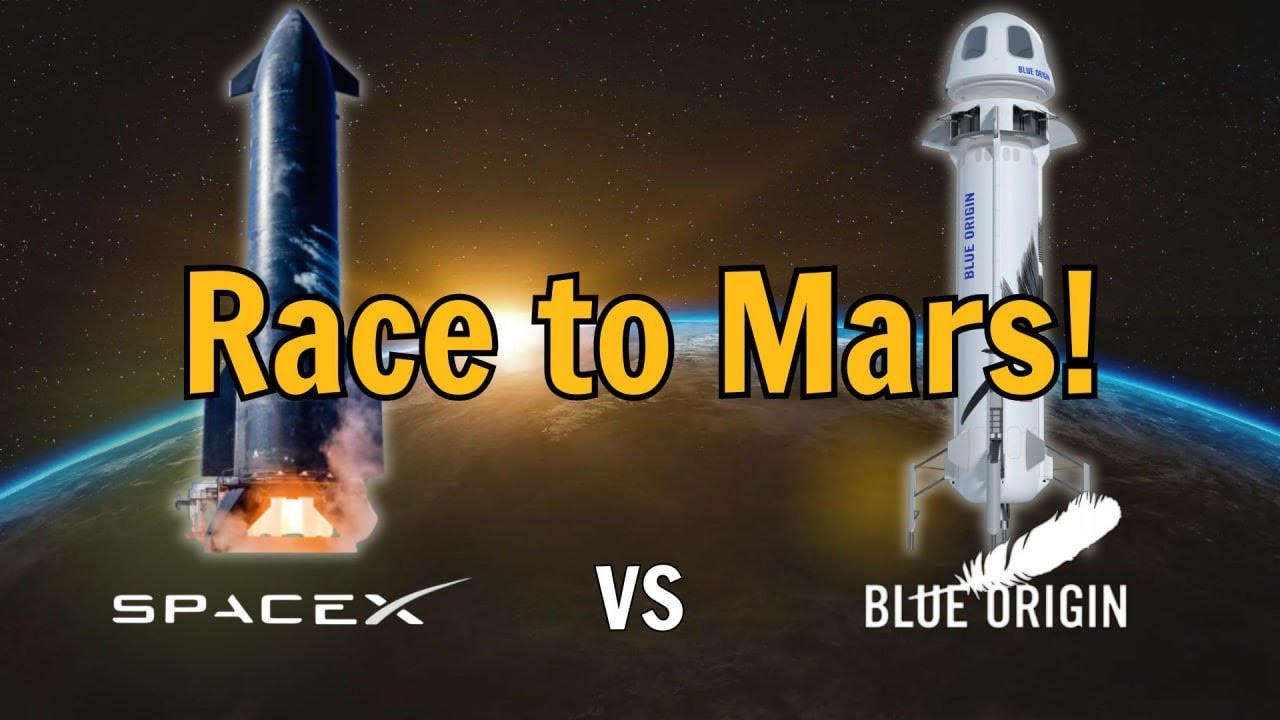
Watch the video analysis on YouTube: SpaceX vs Blue Origin Full Comparison
Imagine the Super Bowl of space exploration: two American giants—SpaceX and Blue Origin—racing to send humans to Mars. On one side stands Elon Musk’s SpaceX, blazing trails from Texas. On the other, Jeff Bezos’ Blue Origin, building precision rockets on Florida’s iconic Space Coast.
But this isn’t just about rockets. It’s about the future of humanity—and the question of who leads the way to becoming a multi-planetary species.
🚀 SpaceX Starship: Bold Moves from Boca Chica, Texas
Founded in 2002, SpaceX revolutionized space with reusable rockets and astronaut delivery to the ISS. At the heart of their Mars mission is Starship:
- Size: 394 ft tall, taller than the Statue of Liberty.
- Engines: 33 Raptor engines on Super Heavy booster, 6 on Starship upper stage.
- Fuel: Methane + Liquid Oxygen (LOX).
- Payload: 100–150 tons to low Earth orbit (LEO).
- Reusability: Fully reusable (both stages).
- Progress: 5 orbital test flights completed by mid-2025.
- Goal: Permanent, self-sustaining city on Mars by 2030.
While some tests exploded—like SN11 in 2021 or the Raptor failure in 2023—each failure brought new data. Now, Musk targets weekly launches by 2027, driving launch costs below $100M.
🛰 Blue Origin New Glenn: Precision from Cape Canaveral
Jeff Bezos founded Blue Origin in 2000 with a slower, infrastructure-first approach. Their rocket, New Glenn, is engineered for long-term missions and satellite deployment:
- Size: 322 ft tall.
- Engines: 7 BE-4 (first stage), 1 BE-3U (upper stage).
- Payload: 45 tons to LEO, 13 tons to GEO.
- Reusability: First stage only.
- Progress: BE-4 engines tested over 35,000 seconds. Orbital launch expected early 2026.
- Vision: Lunar bases, orbital stations, and a long-term space economy.
Instead of rushing to Mars, Blue Origin aims to build the “space highway”—a backbone of support for future deep space missions.
🧠 Two Philosophies, One Destiny
| Feature | SpaceX Starship | Blue Origin New Glenn |
|---|---|---|
| Reusability | Fully reusable | First stage only |
| Height | 394 ft | 322 ft |
| Payload to LEO | 100–150 tons | 45 tons |
| Orbital Flight | 5+ successful tests | Launch expected in 2026 |
| Primary Focus | Mars colonization | Space infrastructure |
| Launch Site | Texas (Boca Chica) | Florida (Cape Canaveral) |
| Cost per Launch | ~$90M | ~$150M |
Musk moves fast and embraces failure. Bezos moves carefully with a focus on long-term infrastructure. Both strategies are vital to a thriving space future.
🇺🇸 Why This Race Matters to America
From Boca Chica to Cape Canaveral, both companies create thousands of American jobs, drive aerospace innovation, and contribute to NASA programs like Artemis.
- SpaceX flies astronauts to the ISS.
- Blue Origin is a key player in lunar cargo and NASA partnerships.
This isn’t just competition—it’s collaboration through contrast. Together, these companies are redefining what it means for America to lead in space.
❓ FAQs – Frequently Asked Questions
🔹 What’s the difference between Starship and New Glenn?
Starship is fully reusable and built for Mars colonization, while New Glenn is partly reusable and focused on space infrastructure and orbital payloads.
🔹 Will SpaceX reach Mars before Blue Origin?
Yes, based on current testing. SpaceX is expected to attempt Mars landings by 2028–2030. Blue Origin is not currently focused on Mars landings.
🔹 What is the payload capacity of Starship?
Starship can carry 100–150 metric tons to LEO, making it the most powerful heavy-lift rocket ever built.
🔹 Which rocket is more cost-efficient?
SpaceX Starship is projected at ~$90 million per launch, significantly cheaper than New Glenn’s ~$150 million.
🔹 Is NASA working with both companies?
Yes. SpaceX handles crew transport and lunar landers; Blue Origin contributes to lunar cargo delivery and orbital station development.
🌠 Final Thoughts
Whether you back Team Starship for its Mars ambition or Team New Glenn for its sustainable roadmap, one truth remains:
The next great leap isn’t about who wins—
It’s about how far we all go, together.
Like, share, and comment: Are you #TeamStarship 🚀 or #TeamNewGlenn 🌕?
